
Bondage for Beginners: Your Complete Guide to Safe Restraint Play

Restraint is one of the most commonly fantasised-about experiences in sex — and one of the easiest to explore. You don't need a dungeon, a specialist wardrobe, or years of BDSM experience. A blindfold and a scarf is enough to get started. Most beginners already have everything they need.
This guide walks you through everything you actually need to know before you begin: consent, safety rules, the product types that work best for newcomers, and how to make the whole experience genuinely good for both of you.
What is bondage?
Bondage is consensual restraint — one partner (the person being restrained, often called the bottom or submissive) agrees to be physically limited while the other (top or dominant) takes the lead. The restraint can be as simple as holding someone's wrists or as elaborate as full rope work.
The appeal is real: being restrained heightens sensation, removes the pressure to "perform," and creates a deep sense of trust between partners. For the person doing the restraining, it's about care and responsibility as much as control. Done well, it's one of the most intimate things two people can do together.
Before you begin: consent and communication
Every credible guide to bondage — and this one — starts here, because it's the single most important thing. Have a genuine conversation before you start, not during. Cover:
Be specific. Wrists restrained? Blindfolded? Both? Agreeing on what's happening removes ambiguity and lets both of you actually enjoy it.
Things that are completely off the table for either partner. These are non-negotiable and must be respected without question, no matter what.
Things you're curious about but unsure of — willing to try carefully, not to be pushed into. Knowing the difference matters.
Agree on it before you start, not in the moment. Both partners must know it, and using it must carry zero judgement — it means the system is working.
Safewords and signals
A safeword is a pre-agreed word (or signal) that immediately pauses or ends the scene. The most widely used system is the traffic light method:
- Green — everything's good, keep going.
- Yellow — slow down, check in, I need a moment.
- Red — stop immediately, scene ends now.
If you're using any kind of gag or face covering, verbal safewords don't work. Agree on a physical signal instead — three firm taps on your partner's body, or holding a small object (keys, a ball) that can be deliberately dropped to signal stop. Keep it simple and practise it beforehand so it's instinctive.
Using a safeword is not failure or weakness. It is the whole point of having one. Reinforce this with your partner before every scene.
Physical safety: the non-negotiables
Bondage done carelessly can cause real injury — nerve damage, restricted circulation, or psychological distress. These rules are not optional:
- The two-finger rule. At every point of contact between skin and restraint, you should be able to slide two fingers underneath. If you can't, it's too tight.
- Check in regularly. Ask your partner how they're feeling every few minutes — especially if they're new to being restrained. Nod if a verbal answer isn't possible.
- Watch for warning signs. Tingling, numbness, pins and needles, or skin turning red, purple, or blue means circulation is restricted. Release immediately.
- Avoid the neck entirely. Never apply pressure to the neck — not ropes, not collars worn under strain, nothing. This is the one area with no margin for error.
- Protect the wrist nerves. Keep restraints away from the inner wrist and the back of the hand where nerves run close to the surface. Around the wrist bone is safer.
- Never leave your partner alone while they are restrained. Not even briefly.
- Keep safety scissors within reach. EMT shears can cut through rope, tape, or fabric in seconds. Buy a pair, keep them visible during every scene.
- Play sober. Alcohol and other substances impair your ability to communicate and to recognise when something is wrong. Both partners should be clear-headed.
Bondage products for beginners
1. Bondage tape — the easiest possible starting point

Bondage tape is a self-adhesive film that sticks only to itself — not to skin or hair. You wrap it around a wrist, it holds, and it peels off cleanly afterwards. There are no knots to learn, no risk of it tightening involuntarily, and it can be cut or torn off instantly. It's by far the lowest-barrier way to try restraint play.
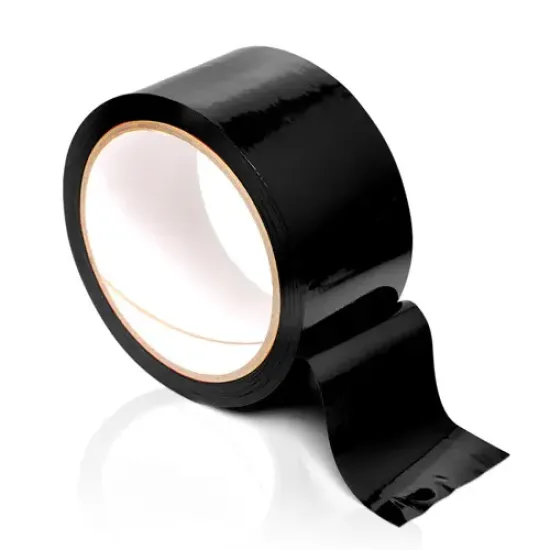
Self-adhesive, sticks only to itself. No knots, no tangles, no residue. Ideal first buy.
£5.99 — Shop
High-strength version with a brighter finish. More tape per roll for longer scenes.
£7.99 — ShopWhy tape is perfect for beginners:
- No knot knowledge required
- Can't tighten accidentally
- Tears off quickly in an emergency
- From £5.99
2. Beginner bondage kits — best way to start exploring
A kit takes the decision-making out of it. You get a curated set of compatible pieces — typically a blindfold, cuffs, and a tie or tickler — that are designed to work together and pitched at exactly the right level for newcomers. If you're not sure where to start, a kit is the answer.

Ouch Introductory Kit — Purple
Satin blindfold, wrist cuffs and ties. Soft, safe, and exactly right for a first session.
£15.99 — Shop
Ouch Introductory Kit 3 — Black
Black edition of the introductory set. Blindfold, ties and cuffs in a sleek colourway.
£15.99 — Shop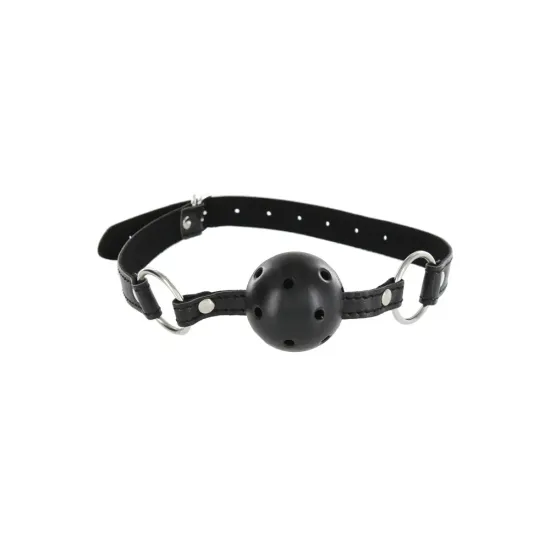
A fuller kit with more pieces — good if you want to experiment with more variety from the start.
£28.99 — ShopBrowse all beginner bondage kits →
3. Soft cuffs and wrist restraints — the classic starting point
Purpose-made restraint cuffs are a big step up from improvised ties — they're designed to hold securely without cutting off circulation, and the best beginner options include a quick-release mechanism so either partner can end the scene instantly. Look for padded or lined cuffs; unlined metal or tight leather cuffs are for more experienced players.
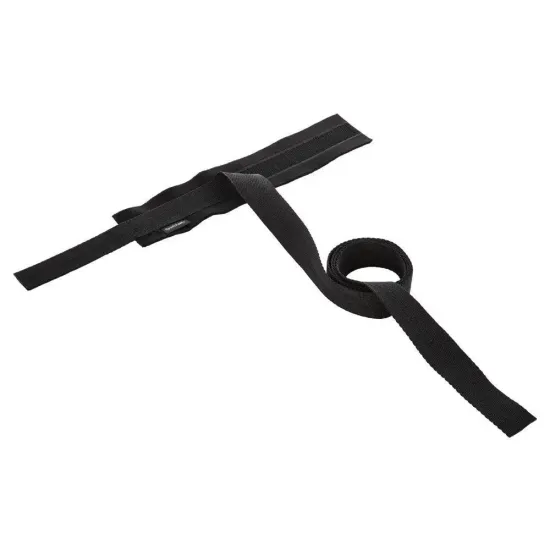
Our pick: SportSheets Beginners Bondage Fantasy — £21.99
A complete beginner set from one of the most trusted names in soft bondage. Velcro-adjustable cuffs with a satin blindfold — designed specifically for first-timers, with comfort and quick release built in.
View Product Browse wrist restraints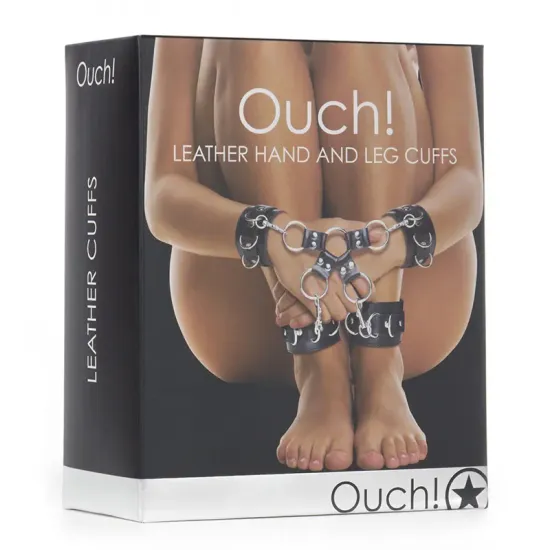
Step up: Shots Ouch Leather Hand & Leg Cuffs — £23.99
Faux leather cuffs covering wrists and ankles. A good next step once you're comfortable with basic wrist restraint and want to add ankle cuffs to the mix. Adjustable with D-ring attachment points.
View Product4. Under-bed restraints — full four-point without the setup
Under-bed restraint systems slide discreetly under a mattress and provide anchor points at all four corners. No tying, no headboard required, and they pack away completely flat — there's nothing to explain to houseguests. They give you genuine four-point spreadeagle restraint with almost no setup time, which makes them ideal for couples who want to progress beyond hand restraint without learning knots.
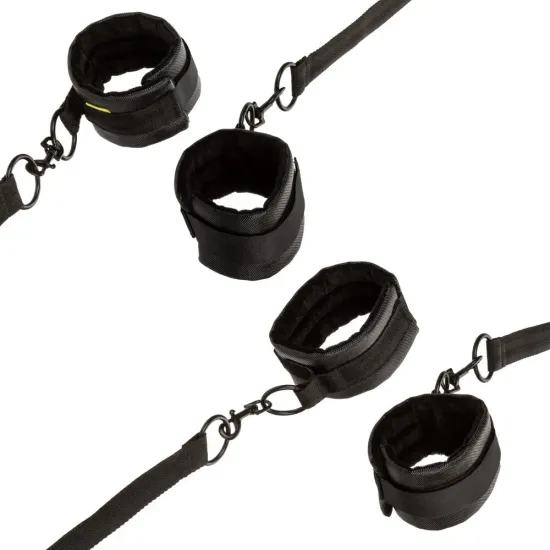
Our pick: Boundless Bed Restraints — £41.99
Slides under any standard mattress to create four anchor points — wrists and ankles. Adjustable straps, quick-release cuffs, and completely discreet when packed away. One of the most popular upgrades once couples have tried basic restraint play.
View Product Browse bed restraints5. Rope — when you're ready to learn
Rope bondage is a different discipline — more involved, more intimate, and requiring more learning than anything else on this list. It's deeply rewarding when you get there, but it's not a beginner starting point. When you are ready, start with soft cotton or nylon rope rather than natural hemp or jute (which can be rough on skin and behaves differently). Learn the basics of a single-column tie before moving to anything more complex.
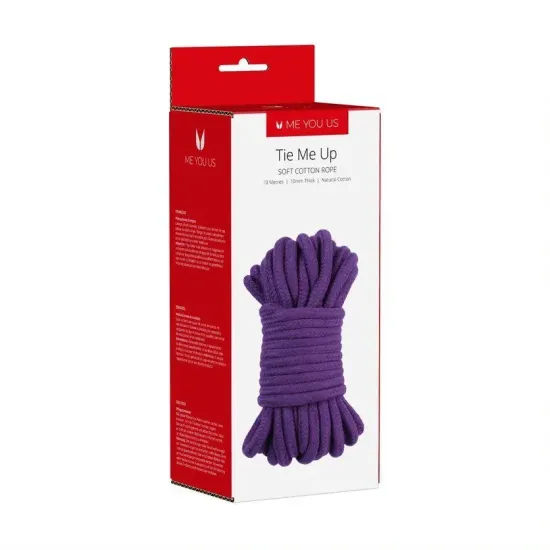
Start here: Me You Us Soft Cotton Rope 10m — £6.99
Soft cotton is the most forgiving rope for beginners — gentle on skin, easy to unknot, and doesn't tighten under pressure the way natural fibre ropes can. 10 metres gives you enough to experiment with basic wrist or ankle ties.
View Product Browse bondage rope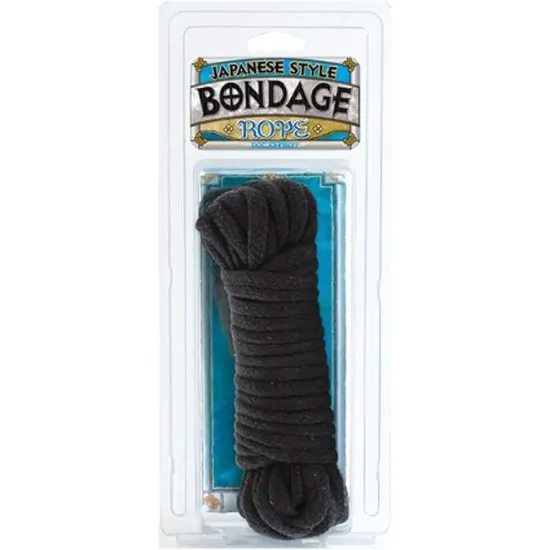
Step up: Japanese Style Bondage Rope — £19.99
For those moving toward shibari-style rope work. Smooth nylon construction, easy to handle, and long enough for partial body ties. Best approached alongside learning resources — books, workshops, or reputable online tutorials.
View ProductQuick comparison: which to start with?
| Product | Best for | Skill needed | From |
|---|---|---|---|
| Bondage tape | Absolute beginners, spontaneous play | None | £5.99 |
| Starter kit | First-timers who want a curated set | None | £15.99 |
| Soft cuffs | Secure wrist/ankle restraint, easy release | Minimal | £21.99 |
| Bed restraints | Four-point restraint, no knots | Minimal | £41.99 |
| Cotton rope | Learning basic ties, creative restraint | Some | £6.99 |
Aftercare — don't skip this

Aftercare is what happens after the scene ends. It matters more than most beginners expect, and it's covered by every experienced practitioner for good reason. A bondage scene — even a short one — can produce intense physical and emotional responses, and coming down from that experience needs care.
Remove restraints gently. Check skin for marks or indentations — light redness is normal, deep marks or numbness are not. A warm blanket and a drink (water or something warm) help both partners come down.
Talk — or just stay close. Reassurance matters. Some people feel vulnerable after a scene; others feel euphoric. Both are normal. Meet your partner where they are.
An emotional low — sometimes sadness, irritability, or anxiety — can arrive hours or even days after an intense scene. It's a recognised phenomenon for both partners. Check in with each other in the days that follow, especially after your first few times.
Once everyone's had time to decompress, talk about what worked and what you'd change. This is how you learn what you both enjoy — and it makes every subsequent experience better.
Frequently asked questions
Ready to explore?
From beginner kits at £15.99 to rope and full restraint sets. Free delivery on orders over £35. Discreet packaging on every order.
Browse All Bondage →